Odo-Eku
BRIEF HISTORY OF ODO-EKU TOWN OR ODO-EKU COMMUNITY:
1.0 Name: ODO-EKU or ODO-EEKU, depending upon the dialect of pronunciation, is a compound word. ‘ODO’ means river; while EKU means a pit where palm kernel is processed to extract palm oil. Odo-Eku, therefore, means the town at the river where palm oil processing is taking place.
Figure 1: The Logo of Odo-Eku Community
2.0 Early settler: Ogunlade Alapa, a hunter and farmer settled at where it is known today as Oke-Olola, while Ogunrinde put up at Ajogbo. The first came from Oyo through Olla, while the second through Kudu Owode and had his source traced to Ile-Ife. Others followed, one after the others, because of the favourable conditions that were present in the new settlement. This was around the later part of the sixteenth century -1500s.
3.0 Location: Odo-Eku is an historical name of a town that is located in the heart of Igbomina land and at the northern edge of Isin Land or [Ile-Isin] that used to constitute Isin District, but today Isin Local Government of Kwara State. It was formerly under Irepodun Local Government Area of Kwara State until 1996. Before the creation of Irepodun Local Government, it was under Igbomina/Ekiti Division.
Odo-Eku is bounded in the east by Iwo, Sabaja and Owu towns; in the West by Igbaja and Ofarese; in the North by Owode/Odu-Ore and in the South by Oponda. Odo-Eku forms the boundary between Isin and Ifelodun Local Government Areas of Kwara State on the western side by Igbaja.
Odo-Eku has the type of geographical conditions that characterized guinea-sudan savanna type of vegetation; having being located at approximately Latitude 8°15′ North of the Equator and Longitude 5°0′ East of Greenwich meridian.
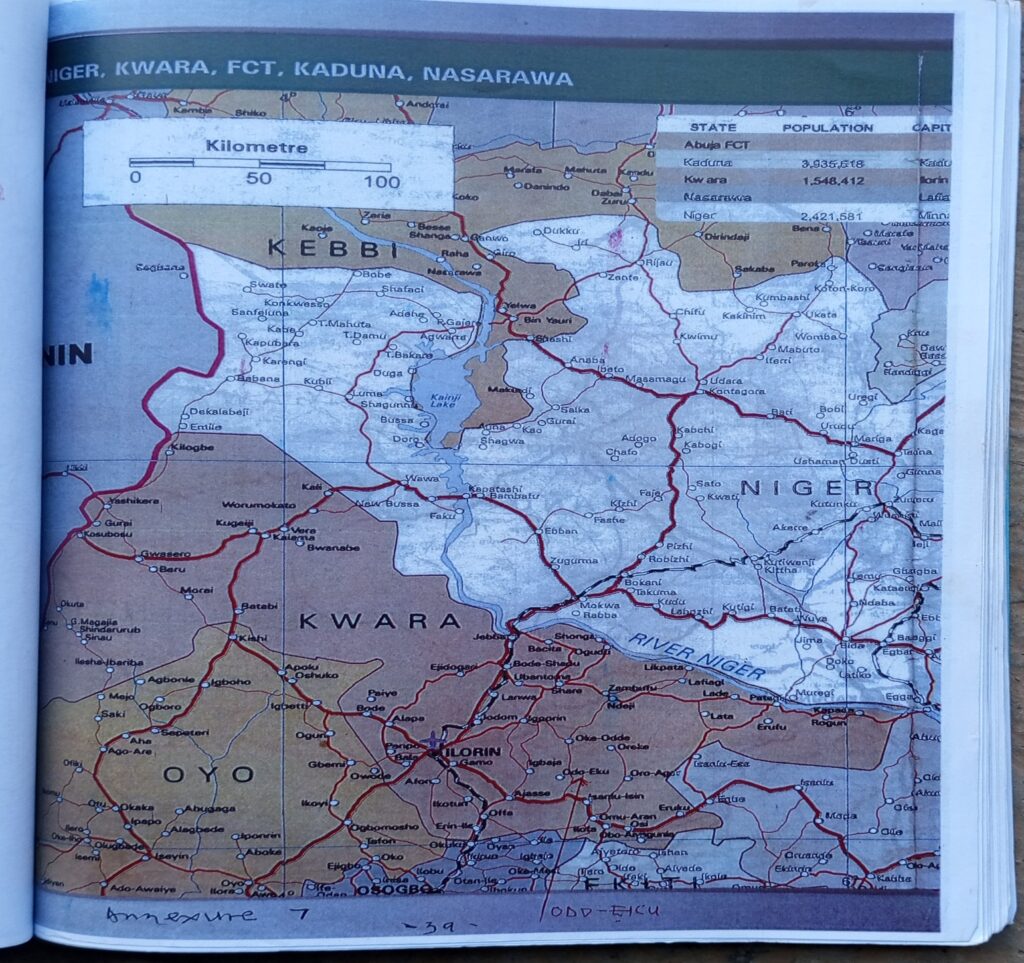
Figure 2: Map of Nigeria showing Odo-Eku among other communities in Kwara State
4.0 Composition and Tradition: Odo-Eku consists of about thirteen main compounds and some subsidiary compounds made up of different houses or families. Namely: Oke-Olola, Tasoro, Ajogbo, Igbagbote, Ile-Titun, Ago-Oloba, Oke-Ago, Ago Idofian, Ago Alaba, Ago Idaho, Alaro, Owode, Ilupeju, Ile Onire, Oke-Alapa and Oke-Ora, each of which came from different areas, but virtually from Yoruba land. There are also Alaro GRA, Arokowasile, Alagbede, Olukotun, Onidanla, Gavel Resettlement, Olola Avenue and Surulere Alapa which are extensions of some main compounds.It was traditionally revealed that Alapa Ogunlade left Olla enroute Oyo when he was robbed of his chieftaincy post. It was said that when it was his turn to become the King of his town – Olla – the people decided against him and replaced him with another man from another lineage who by whatsoever criteria did not suppose to reign. Ogunlade considered this action as a non-bearable insult. He thereafter left Olla and founded Odo-Eku where many of his people joined later and settled finally.
Alapa Ogunlade made his own compound at Oke-Olola, which was initially called and known as Oke-Alapa, called after the founding father; while AgidiAlopeniku Ogunrinde, the second settler, settled at Ajogbo. He was from Ile-Ife through Kudu, an ancient nearby town.
Akanni was the third settler. It was said that he was from Alla, another ancient nearby town. He settled down at Ile-Titun or New Settlement Area.
The other people at Odo-Eku Community came also from different areas at different times. The Bogunjoko family of Igbagbote was from Oba, the Esa-Orun lineage of Olatunde-Adeniyi families was from Obin or Obinrin, a town near Igbaja, having descended from one Olu-Awo.
The Arokowasile lineage was from Ofarese in Ireseland. Oke-Ago is an area that was composed by many families that traced their descendants to Idofian and these included the families of Sanya, Olowo-Okere, Ogundiran, Odewale, Akanmun, OjeniyiOsakunle and Adeyanju. Elesie and Gbojua houses at this Oke-Ago were respectively from Esie and Sie. Ile Alagbede was from Oke-Ode while the Morenikejis traced theirs to Ado-Ekiti.
Oke-Olola, which was formerly known as Oke-Alapa, named after the founder of the town and of the compound consists of three main family members who, together, came from the same family at Olla after the unsettled chieftaincy dispute.
They also jointly share a common panegyric or praise poetry which runs thus:
‘Olla, Ogainaadisioro lo ko o lomi,
Omoabekekereti se ojuyankoyanko
Oodidemo de kunoro le l’oola
Ogainki mode, o di joku baba won
Aabeiponpontimopon so le lolla,
Segede de, segedemun mi laabe je,
Mo gun yan sole lolla,
Segedetun de, o tunmun mi niyan je
Mo wagboneegbonowu so ielolla,
Segede de, segedenwaroju,
Segedemonrojumon.
Eegbonowukowoni
Eegbonowu o to mi leerulolla,
Ofeegegemomun se dele wa, ……’
Ajogbo, the second ruling house at Odo-Eku, just as Oke-Olola, also consists of three main families at Ajogbo.
5.0 Summary Of The Rulers Of Odo-Eku Up-To-Date
- Alapa Ogunlade around 1590 -1750
- Oni-Are around 1750 – 1815
3 Eesa-Orun around 1815 – 1862
- Monmodu (Ahmadu) around 1862 – 1940
- Aluko 1940 – 1945
- Ifaniyi 1945 – 1970
- Aminu Adeyemi 1970 – 1976
- John Alabi Bamigboye 1976 – 2007
- Professor Ezra Bamidele Bamgboye 2007 to 2019
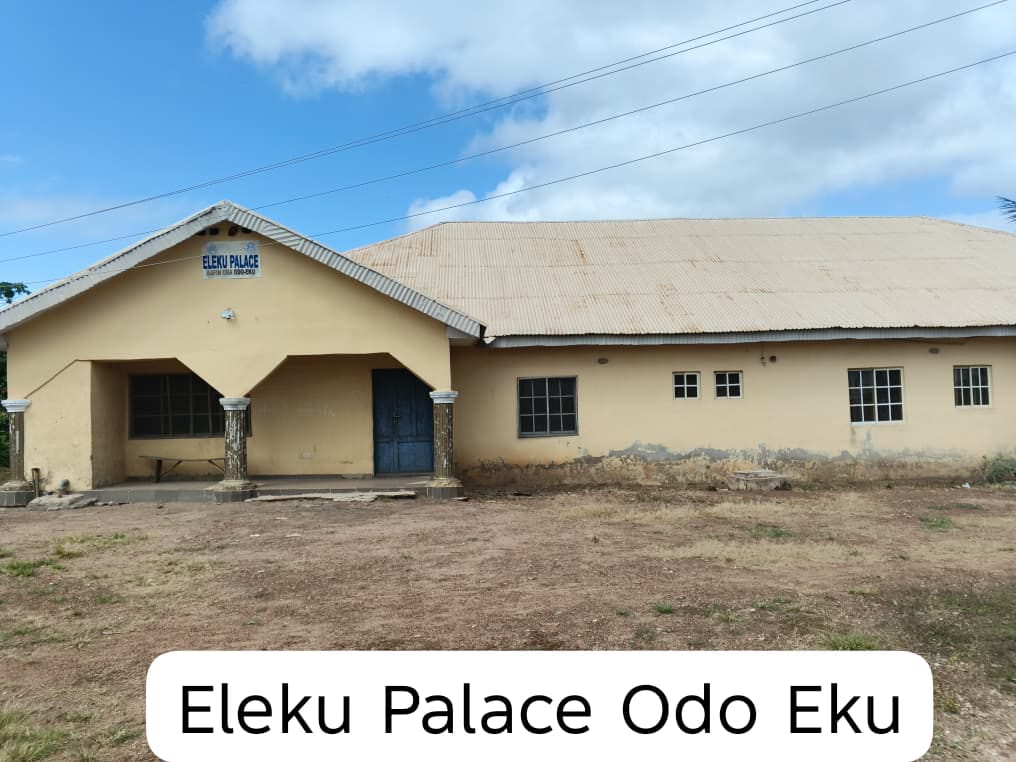
- Engr. Abdulwahab Aboyeji Ogunbiyi 2019 to date
6.0 Some Various Traditional Titles At Odo-Eku And The Houses That Produce Them
| S/No | HOUSES | TITLES |
| 01 | Oke-Olola and Ajogbo | Oba |
| 02 | Oke-Olola and Ajogbo | Eesa |
| 03 | Iletuntun | Asanlu |
| 04 | Oke-Olola | Aaro |
| 05 | Ajogbo | Ooju |
| 06 | Oke-Olola | Odofin |
| 07 | Iletuntun | Onifun |
| 08 | Iletuntun | Esinkin |
| 09 | Alaaba | Olomu |
| 10 | Ajogbo | Olukose |
| 11 | Alagbede | Elesa |
| 12 | Ile Onire | Eleju |
| 13 | Idi Ose | Olukotun |
| 14 | Oke-Olola | Elemoso |
| 15 | Oke-Olola | Ajaponna |
| 16 | Oke-Olola | Olora |
| 17 | Oke-Olola | Enisin |
| 18 | Oke-Ago | Eni-sin |
| 19 | Owode | Akogun Owode |
| 20 | Ajogbo | Osolo |
| 21 | Aroko | Oniwanu |
| 22 | Olatunde | Ojomu |
| 23 | Oke-Ago | Sawo-Ilu |
| 24 | Owode | Onire-Owode |
| 25 | Ile Aala | Olupo |
| 26 | Ajogbo | Asa-Oye |
| 27 | Ile Idaho | Agabaja |
| 28 | Ile Oloba | Oloba |
| 29 | Ile Oloba | Petu |
| 30 | Ile Idofian | Aare Idofian |
| 31 | Oke-Ago | Eni-sin |
| 32 | Oke-Olola | Olora |
| 33 | Ajogbo | Asa-Olu |
| 34 | Ajogbo | Olomo |
| 35 | Oke-Olola | Akogun-Ilu |
| 36 | Oke-Olola | Olomi |
| 37 | Ile Onire | Onire |
| 38 | Arokowasile | Olofa-Irese |
| 39 | Ile Oloba | Akogun-Oloba |
7.0 Historical Significance And Cultural Heritage Of Odo-Eku Community
Many small, but largely permanent, streams such as Omi-Eku, the most note-worthy one, Odo-Oloko, Odo-Isale-Ope, Omi-Oko, Odo Idaho [Omikin] Omi-Ilu, OdoAyaba, Odo-Idiagba, Omi-Oloriri [Lake Odo-Eku], Odo Omidoyin, Okin and Oyi rivers spring up from the foot of different hills.
Omidoyin, water becomes honey, is to the east and to some people, it marks the boundary between Iwo and Odo-Eku. In terms of size, perhaps, the largest and the longest of these rivers is Oyi River, which cuts across many Local Governments in Kwara State. It forms points of demarcation between Odo-Eku and Oponda and Igbaja to the south and west respectively.
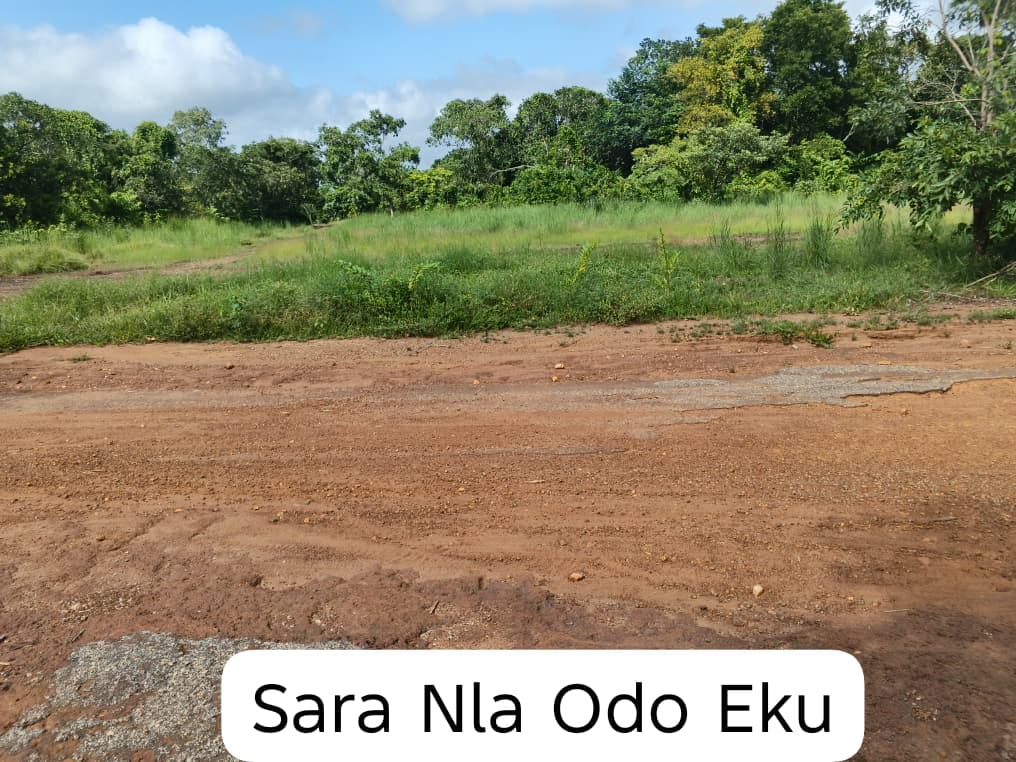
There are other historical structures in the eastern part of the town. These include Sara-nla and Sara Kekere, which literally mean respectively, large and small plain lands. There are additionally some hills, which though not of mountainous standard are of historical significance. These include Oke-Gidado to the north and Oke-Baba-Ebora to the south.
Alaaba, a one-time farming settlement, Aregbe, Igbo BudoAjia [which was not unconnected with where the Ajia from Ilorin Province used to camp himself at initially], Igbo Ogan, and Omidoyin
Odo-Eku was noted for her Ogun worshipping in the olden days before Christianity and Islam. Islam got to Odo-Eku around year 1900 and Christianity in the 1920s with the establishment of Sudan Interior Mission, which later metamorphosed to Evangelical Church of West African [ECWA] and now known as Evangelical Church of Winning All [ECWA].
8.0 Significance of Odo-Eku in the past in different ways and forms:
- Odo-Eku used to serve as a nodal town where many roads leading to other places converged. Presently, there is still a place called ‘Orita meta’ where roads leading to Agbeku in Ifelodun Local Government Area, Sabaja and Edidi meet. There is also a foot path leading to Igbaja in Ifelodun Local Government converging at this same point. Foot paths leading to Odu-Ore and Owu are in existence.
- With the creation of Ilorin Province, Ilorin became the Provincial Headquarters and tributes were then paid by the people of Odo-Eku to Asunnara, the first son of the then Emir. This made Odo-Eku to be reckoned with throughout the era by the Emir at Ilorin. Odo-Eku became more influential in other respects. For instance, it was in the memory that Oni-Are made it possible for the town and the ruler to free many people from the surrounding villages that were caught as slaves. That further strengthened the relationship between Odo-Eku and some of the neighbouring villages. A place known as ‘BudoAjia’ still exists at Odo-Eku. That place was chosen as a place of settlement by the Ajias from Ilorin during that period.
- At local level, Odo-Eku was and is still a force to be reckoned with when the activities of some members of the Community are reviewed. The forgotten Isin Progressive Union (I.P.U), Ekiti Progressive Union (E.P.U) and Igbomina Society Council (I.S.C) had as their brains behind such men from Odo-Eku as Samson Oyun Ogunbiyi, Peter Baba Olatunde and SosipaterIsola Bogunjoko, all of blessed memory. In one way or the other, they helped the whole Igbomina-Ekiti land and not only the Isin people, especially, in driving away the then Residing District Officer, popularly known as and called D. O. Ajia who was based at Oke-Onigbin through the letter written by Chief Samson Oyun Ogunbiyi. D. O. stood for District Officer. The D. O. Ajia served as a Judge judging all cases from the area. But, with the petition letter and his subsequent withdrawal from the District, the Obas and Chiefs then had the powers to preside over all matters and rule their people without any interlopers.
- These various Societies culminated together during the preparation for Nigeria independence in late nineteen fifties and led to the sponsoring of Chief P.B. Olatunde on the platform of Action Group or A. G. under the leadership of Chief Jeremiah ObafemiAwolowo. Chief Olatunde won at the election and he was consequently elected as an Honourable Member of the House of Representative of Nigeria.
- Odo-Eku Community was noted for her self-helped development just as many communities in Igbomina land:
(vi a) Odo-Eku constructed a water dam with township reticulation in the year 1978. The water dam was the first of such in the whole area. It was built entirely by Community efforts and solely for Odo-Eku Kingdom.
(vi. b) Odo-Eku with the supports of two other towns – Alla and Oponda – constructed very solid bridge across Oyi River in the early 60s. Today, the bridge remained one of the strongest bridges across Oyi River around us.
9.0 CONCISE Biography/Profile Of The Traditional ruler
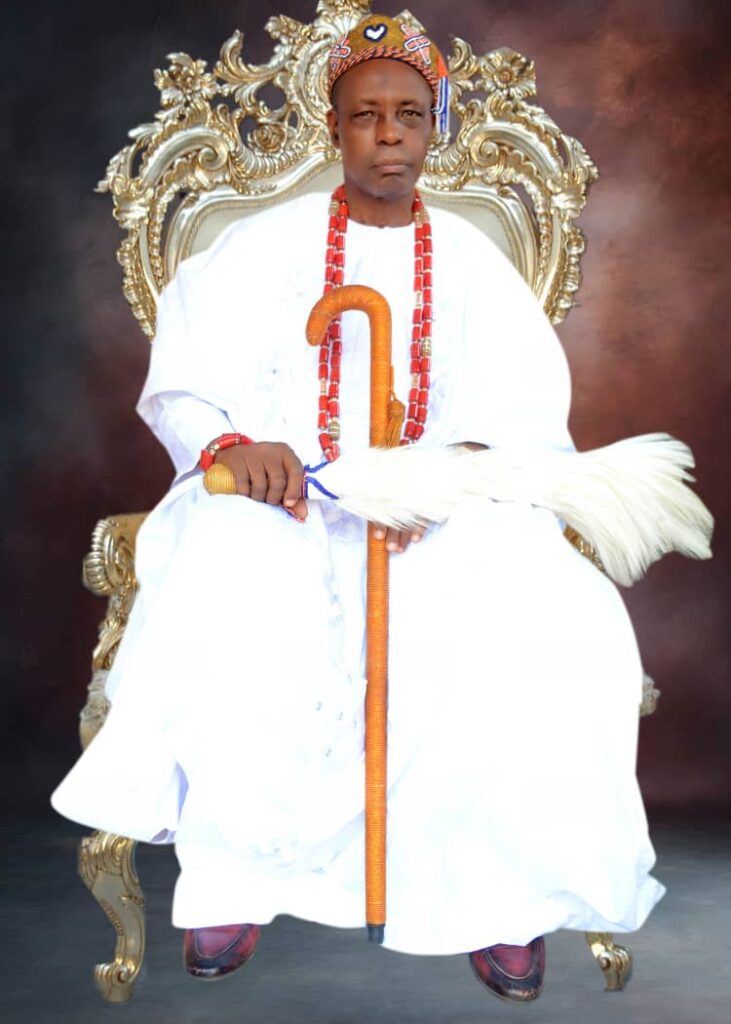
HRM, Oba Engr. Abdulwahab Aboyeji Ayanda Ogunbiyi, FNSE, FNIEE, MNiMechE, The Eleku of Odo-Eku [E-Mail: ogunsearch13@gmail.com (0803 305 4449)]
Birth: AbdulWahab Ogunbiyi was born 10/10/1958 to the Royal family of late Alfa Yesufu Alao and late Madam Asiawu Ogunbiyi of Oke-Olola Compound, one of the Royal Houses, in Odo-Eku.
Education: As a son of an Alfa, AbdulWahab spent his early life with a local Islamic Teacher at a village called Fagbade in the present day Osun State. He later started his primary education in 1970 at ECWA primary school Omu-Aran and finished in1975. As a morally and academically sound pupil, AbdulWahab led his class and was the head boy at graduating class.
He gained admission to Government Secondary School (GSS) Omu-Aran same year (1975), and finished in1980. At GSS Omu-Aran, AbdulWahab was again a leader academically and morally. He was the Class Captain from form one to three, Time keeper in Form 4 and Head boy in Form 5. He led his class throughout as a Science Student and was also the President, Muslim Student Society of Nigeria (MSSN) GSS Branch and Omu-Aran Area Council in 1979/80. His administration was spectacular in the history of the School that, the Principal’s remark was “Excellent”.
In 1981, AbdulWahab gained admission into the School of Basic Studies, Ahmadu Bello University Zaria for his “A” levels and thereafter, in1982, admitted to read Mechanical Engineering in the same University. He graduated from the University in 1986 and was known for his hard work and commitment to his profession. His final year project remained outstanding for more than 15 years after his graduation while his paper titled ”Motor Industry in Nigeria” at the Engineering Students’ week in 1986 was an outstanding paper in the Faculty.
NYSC: AbdulWahab was posted to Lagos State for NYSC in 1986/87. He served in the Ministry of Works and Transport. Again, as a Corper, he left a record that has not been beaten to date in the Ministry. During his service year 1986/87, AbdulWahab under took a machine design project,
Farm Weeding Implement, which was valued much by the NYSC Lagos State and the State Ministry of Works and Transport. The machine was to be attached to a tractor for weeding operation in the farm. The design work was satisfactorily completed within the service year. As a result of that, he was awarded a merit award and offered automatic employment by Lagos State Government. His school (ABU) also recognized the work and offered him graduate assistant post. As a young graduate, AbdulWahab, did not, for a day, look for a job.
LAWMA: Consequently, he was deployed to the then Lagos State Waste
Disposal Board (LSWDB) now Lagos Waste Management Authority (LAWMA) in 1987 as a Maintenance Engineer and rose from Mechanical Engineer II to Chief Mechanical Engineer, occupying various positions up to the Controller of Works and Head of Engineering Department before being transferred to the Lagos State Ministry of Works. At LAWMA workshop, Engr. Ogunbiyi designed and fabricated a number of machine parts and components to aid his maintenance works. In 1998, he designed a “Rotary Waste Incinerating Kiln” for the Lagos State Ministry of Environment and constructed two Staff Buses in 2003 from scraped waste trucks for LAWMA.
Lagos State Ministry Of Works: Engr. Ogunbiyi was transferred from LAWMA in 2005 and posted to the Research Unit of the Mechanical Services Department of Lagos State Ministry of Works in April 2006 as a Research Engineer. He designed and developed the following machines and plants:
(i) Shredding Machine for solid waste management (2008/2010);
(ii) Pulverizing Machine for solid waste management (2008/2010);
(iii) Road Sweeping Machine for road maintenance (2010/2012);
(iv) Interlocking Brick Making Machine for road construction
(2013/2014);
(v) Hand Operated Fruits Juice Extractor for family and office use (2014);
(vi) Mechanized Abattoir (2013/2014) – yet to build
(vii) Lagoon Weeds and Wastes Harvesting Boat (2014/2015) -yet to
build;
(viii) Hot Air Rotary Fish Drying Plant for drying of fish, meat and
vegetables;
(ix) New road sweeping machine, (2015/2017);
(x) E- Waste treatment machines and equipment (2015) – yet to build;
(xi) Cassava Chips Rotary Drum Drying Plant – yet to build;
(xii) Hydraulic operated Canopy – yet to build;
(xiii) Interlock Bricks Laying Machine – road construction – yet to build;
(xiv) Mobile Concrete Kerbs Casting Machine – road construction – yet to
build.
General Manager OfLAWMA: Engr. Ogunbiyi was appointed as GM LAWMA between July 2015 – June 2016. As GM (LAWMA): he carried out:
(i) studies on waste characterization and waste generation per capital,
which are key data for effective and economic waste management in
Lagos;
(ii) design and development of machines & equipment for treatment of E-
Waste materials in Lagos. This research work is being considered by
UNEP in Geneva for support to Lagos State for production in order to
adopt it for use as a model to other African countries for E-Waste
treatment.
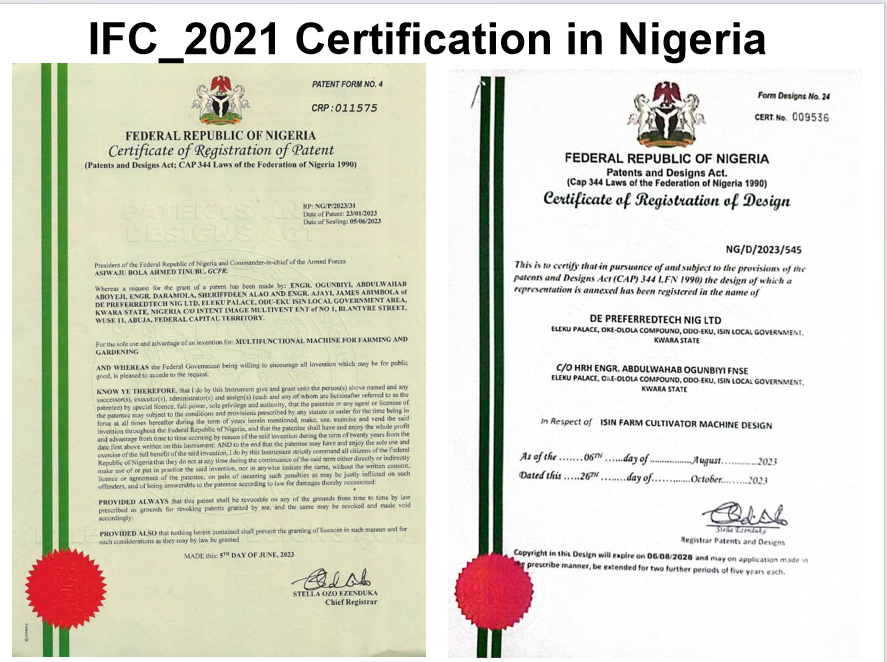
Three of his machines have been granted patent approval by the Federal Republic of Nigeria while process is in progress for another one. He has written twenty-five (25) engineering technical papers, delivered at different fora both in Nigeria and abroad.
By this, Engr. AbdulWahab Aboyeji Ogunbiyi, FNSE, FNIEE, MNiMechE, is one of the flag-bearers of MECHANICAL ENGINEERING profession in Nigeria and outside Nigeria.
10.0 Eleku of Odo-Eku
Engr AbdulWahab Aboyeji Ogunbiyi retired meritoriously from the service of Lagos State, with many machine designs and development to his honour in 2018 and became the Eleku of Odo-Eku Kingdom in 2019.
Between 2019 and 2026, Kabiyesi has used his vast engineering knowledge and experience in the global infrastructure development of Odo-Eku, produced and patented a two-wheel mini-tractor named after his Local Government, Isin Farm Cultivator, for farm mechanization in not only for his Kingdom, Odo-Eku or his Isin Local Government or his Kwara State but Nigeria at large. He is the beloved Kabiyesi of his Kingdom, Odo-Eku.
Isin Farm Cultivator (IFC_2021)
Isin Farm Cultivator (IFC_2021), please see figures below, is a two wheeled mini tractor (2WT), single-axle, belonging to the family of light-farming multipurpose powered-machine being used by small and middle scale farmers across the world – Thailand, for instance, uses over TWO MILLION of small machines like this for her agricultural mechanization. Isin Farm Cultivator is therefor:
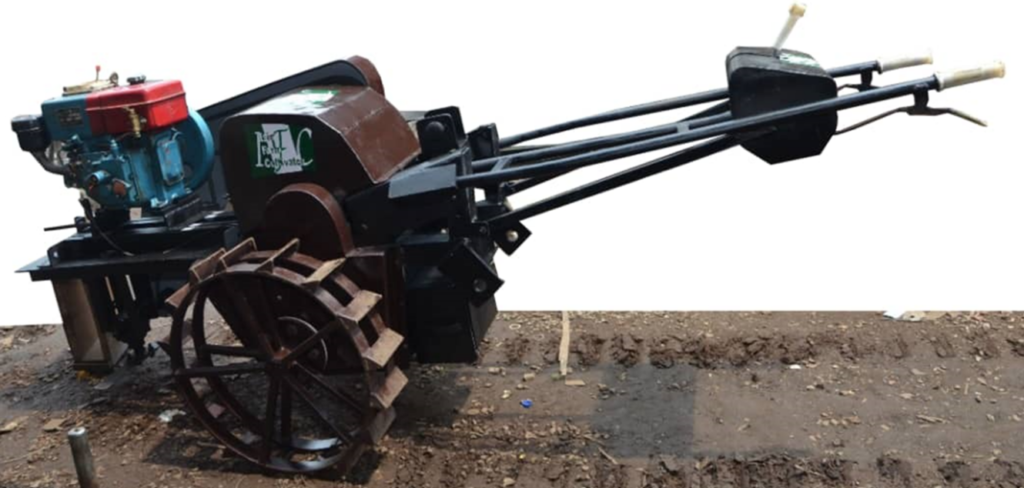
- designed, developed, to perform all jobs being performed by a 4-wheeled tractor in agricultural mechanization in Nigeria;
- designed with simple engineering structure that can easily be maneuvered on the field and suitable to level of available technical knowledge of production, maintenance and operation in Nigeria;
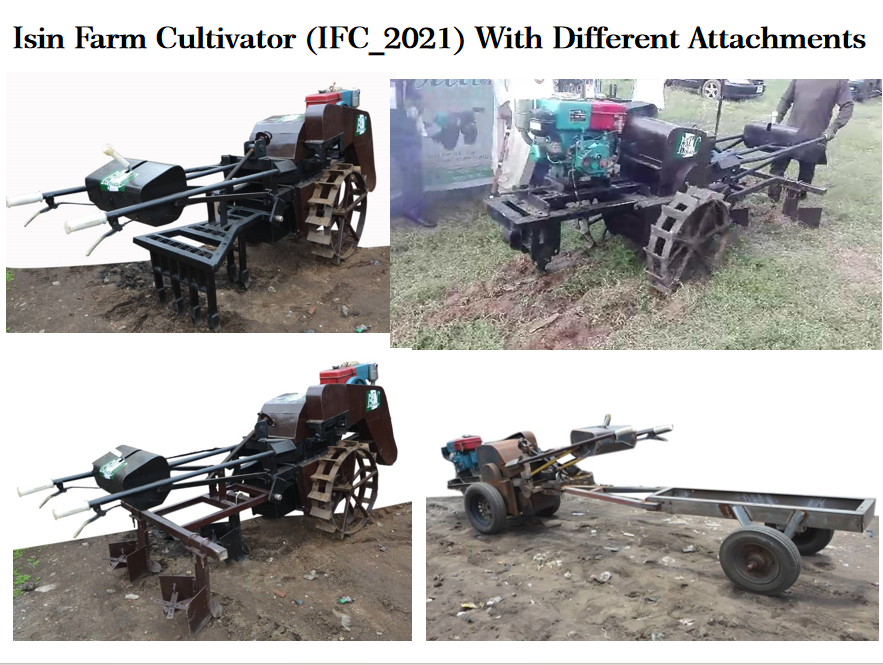
iii. designed and produced to serve as an intermediate contemporary technology, in transforming agricultural mechanization in Nigeria from the presently predominant hand-tool technology to a full-fledged power technology agricultural mechanization of tomorrow;
- designed, developed, patented and named Isin Farm Cultivator after Isin Local Government in Kwara State of Nigeria, as a legacy in the comity of nations just as Steyer Tractor was named after Steyer Town in Austria, Nokia named after the town of Nokia in Finland and many others in the world.